If you are planning a new deck for your East Tennessee home, one of the first and most important decisions you will face is choosing your decking material. Composite and wood are the two most popular options, and both have real advantages depending on your budget, lifestyle, and goals.
At Smoky Mountain Deck Builders, we’ve installed hundreds of decks across Knoxville, Maryville, Farragut, and beyond. We work with both materials every day, so we know firsthand what holds up in Tennessee’s humid summers and unpredictable winters and what doesn’t.
Here is an honest breakdown to help you decide.
What is Composite Decking?
Composite decking is made from a blend of wood fibers and recycled plastic. Brands like Trex and TimberTech have become the industry standard, offering boards that look and feel like wood but require a fraction of the upkeep. Composite boards are engineered to resist moisture, fading, mold, and insects, which makes them particularly well-suited to East Tennessee’s climate.
What is Wood Decking?
Wood decking is the traditional choice, and for good reason. Pressure-treated pine is the most common option for Knoxville homeowners on a budget, while premium species like cedar, redwood, and tropical hardwoods (such as ipe) offer more natural beauty and durability at a higher price point.
Wood has a warmth and character that’s hard to replicate, and if you are willing to invest time in regular maintenance, a wood deck can be a beautiful addition to your home.
Cost Comparison: Upfront vs. Long-Term
When comparing composite vs. wood decking, many homeowners focus on the upfront material cost, but the full picture tells a different story. Wood decking typically costs less per square foot at the time of installation. However, wood requires ongoing maintenance: staining, sealing, and occasional board replacement. Over 10-15 years, those costs can add up significantly.
Composite decking costs more upfront but requires very little maintenance beyond occasional cleaning. When you factor in the long-term cost of ownership, composite often comes out ahead, especially for busy homeowners who don’t want to spend weekends maintaining their deck.
Pro tip: If you are planning to stay in your Knoxville home for 10+ years, composite decking almost always delivers better long-term value.
Maintenance: How Much Work Are You Willing to Do?
This is often the deciding factor for East Tennessee homeowners. Our humid summers and frequent rainfall create ideal conditions for mold, mildew, and wood rot. Which means wood decks require consistent upkeep to stay looking their best.
Here’s what each material typically requires:
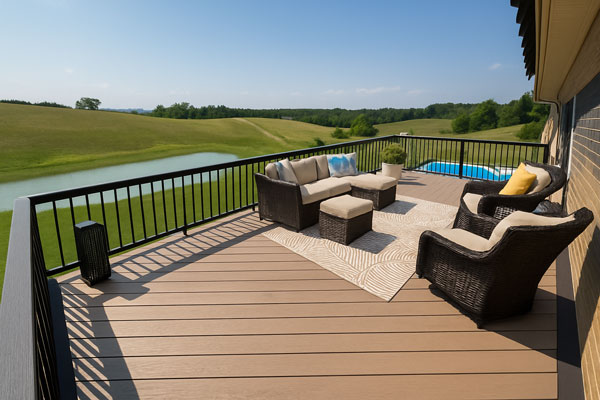
Composite decking:
- Rinse or scrub with mild soap and water once or twice a year
- No staining, sealing, or sanding required
- Most composite boards are covered by 25-30 year manufacturer warranties
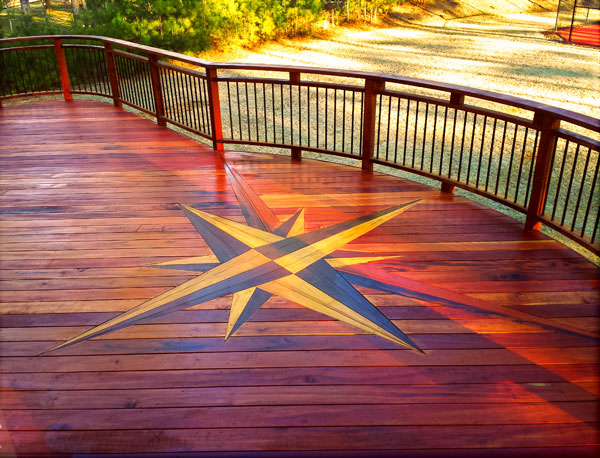
Wood decking:
- Stain or seal every 1-2 years to prevent moisture damage
- Sand periodically to prevent splinters
- Inspect annually for rot, warping, and insect damage
- Replace boards as need
Durability in East Tennessee’s Climate
Knoxville’s weather is tough on outdoor structures. Hot, humid summers encourage mold and mildew. Wet springs and occasional ice events in winter put stress on any material.
Composite decking handles these conditions exceptionally well. It won’t warp, rot, crack, or splinter under normal conditions, and it resists UV fading far better than untreated wood. Premium composite products like Trex Transcend are specifically engineered for climates like ours.
Wood can absolutely hold up in Tennessee, but it needs help. Pressure-treated lumber is resistant to rot and insects, but it will gray and check (develop surface cracks) over time without proper sealing. Cedar and redwood are naturally more resistant than pine but still require regular attention.
Appearance: Natural Beauty vs. Consistent Style
This is where personal preference really comes into play. Many homeowners love the authentic, natural look of real wood, the grain variation, the warmth, and the way it weathers gracefully over time (when properly maintained). If your home is rustic, mountain, or craftsman aesthetic, wood can feel like a natural extension of the architecture.
Composite decking has come a long way in recent years. Today’s composite boards feature realistic wood grain textures, a wide range of color options, and a polished look that holds up over time. Unlike wood, the color stays consistent year after year without fading or graying.
Not sure which look is right for your home? We offer free 3D design renderings so you can visualize both options before you commit.
So Which One is Right for Your Knoxville Home?
Here’s a simple way to think about it:
- Choose composite if you want low maintenance, long-term durability, and a clean look that holds up in Tennessee’s humidity. It’s the better investment for most homeowners planning to stay in their home long-term.
- Choose wood if you love the natural aesthetic, want to keep upfront costs down, and are comfortable committing to regular maintenance each year.
There is no universally “right” answer, the best decking material is the one that fits your lifestyle, your home, and your budget. That’s why we take the time on every project to walk our clients through both options before a single board is ordered.
Ready to Build Your Dream Deck in Knoxville?
Whether you are leaning toward composite or still weighing your options, the team at Smoky Mountain Deck Builders is here to help. As East Tennessee’s premier deck builder, we work with both materials and will give you an honest recommendation based on your specific home, budget, and goals. We serve homeowners throughout Knoxville, Maryville, Farragut, Sevierville, and the surrounding area. Contact Us Today for a free consultation and 3D design rendering, no pressure, just expert guidance.